UPHOLSTERY

Office upholstery cleaning: stains and care

A fresh stain should be blotted off upholstery straight away with a clean dry cloth, never rubbed. The cleaning code on the furniture tells you what is allowed: W means water based, S solvent based, WS both, and X means no liquid at all.

Which office furniture needs cleaning

Office upholstery means more than the sofa in reception. It covers work chairs, meeting room chairs, waiting area sofas and some acoustic fabric panels. A work chair can be in use for the whole working day, yet cleaning it is often forgotten simply because clients never see it.

The work chair is also the piece with the most contact with the person using it. The seat cushion and the backrest collect sweat, hair products and food crumbs, and on dark fabric none of it shows. The difference is usually noticed only when one chair has been cleaned and the one next to it has not.

What to do with a fresh coffee stain

With a fresh coffee or food stain the main thing is to act fast. Blot the liquid up with a clean dry cloth and use a little cold water if you need to. Do not rub, because rubbing drives the dirt deeper into the fabric and can damage the surface.

Soaking the fabric can leave drying marks later. These are pale or dark rings around the stain and they are often harder to remove than the stain itself. If a dry cloth and a little water do not shift it, leave the stain to a professional.

What the upholstery cleaning codes mean

The cleaning code on the furniture is an important clue. W means water based cleaning, S means solvent based cleaning, WS allows both, and X means that cleaning with liquid is not recommended. Always read the manufacturer instructions before you use any product.

The code is usually on a label under the seat or behind the backrest. If there is no label and the origin of the furniture is unknown, test the product on a hidden spot first. Fabric with an X code is cleaned by vacuuming or a dry method only, and liquid can leave a mark that cannot be put right afterwards.

Which fabric suits commercial premises

When choosing furniture for commercial premises, look at how well the fabric stands up to wear. The Martindale rating shows how much rubbing a fabric takes. Colour and weave count as well. A small pattern or a melange yarn hides everyday marks better than a plain pale surface.

In heavily used spots such as the waiting area and the meeting room, go for a denser fabric and a shade that does not show every mark. That cuts the need for cleaning more than any later care will.

How professional cleaning differs from cleaning at home

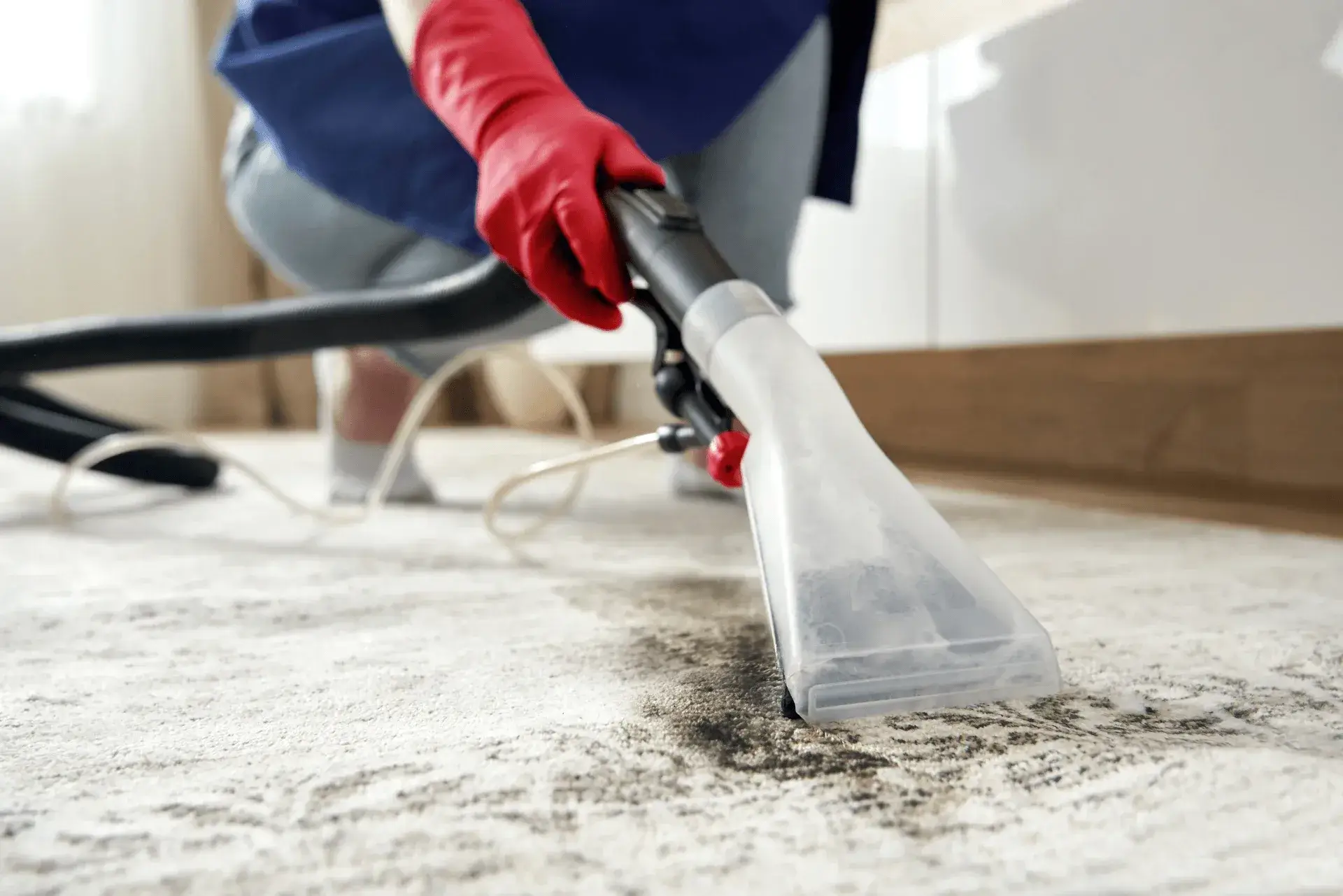
Professional cleaning starts by lifting the loose dirt and checking that the fabric can take the treatment. An upholstery extraction machine pulls the cleaning solution back out together with the dirt. After the work the furniture needs drying time, so it makes sense to book the job for an evening or a weekend.

That extraction step is the main difference between cleaning at home and professional cleaning. Solution left in the fabric attracts dirt, and the surface then gets dirty again faster than before.

How often to clean upholstery

In an ordinary office, work chairs and meeting room chairs can be cleaned once a year, and a busier waiting area more often. While the fabric and the foam are still in good condition, cleaning is usually more sensible than replacing the furniture.

Lux Puhastus provides upholstery cleaning for business clients in Tallinn, Viimsi, Maardu and the Saue area. You can book carpet cleaning on the same visit, or other services such as specialised cleaning. The site survey is free. Ask for a quote.

In this article

Lux Puhastus

Need office cleaning?

Cleaning services in Tallinn

Topics that might also interest you
CLEANING FREQUENCY
How often should an office be cleaned? Frequency by office type and use
A small office usually needs cleaning 1-2 times a week. An open plan office, or one where clients come in every day, is best cleaned 3-5 times a week. A large office building is cleaned every working day. The right frequency depends mainly on how many people work in the office, whether they eat there and how many visitors come in.
MAINTENANCE CLEANING
Ordering maintenance cleaning: what to know first
Before ordering maintenance cleaning, settle the area to be cleaned, the types of room, the cleaning frequency you want and a suitable working time. It also pays to think through which tasks must be part of the service and which needs come up only now and then.
OFFICE CLEANING
Office cleaning: what the cleaning schedule should cover
Office cleaning works when the schedule matches how the space is really used. The daily part covers bins, the toilets, the kitchen, touch surfaces and the floors along the walkways. The weekly part covers deeper floor cleaning, dusting and glass doors.
CLEANING PRICE
Office cleaning price: what the cost depends on
The price of office cleaning comes from the floor area, the cleaning frequency, the layout of the rooms, the floor coverings, the number of kitchens and toilets and the working time.
CHOOSING A CLEANING COMPANY
How to choose a cleaning company: 6 key questions
Before you sign with a cleaning company, ask six things: whether the main cleaner has a named replacement, how the quality of the work is checked, whether the company has liability insurance, what the monthly fee covers, who your contact person is and whether the company has worked.
CLEANING COMPANY
Cleaning company or your own cleaner: how to choose
When a business needs its office or other commercial premises cleaned regularly, one question comes up quickly: hire your own cleaner, or order the service from a cleaning company? The answer rests on who carries the responsibility.
WINDOW CLEANING
Commercial window cleaning: how often and what it costs
Most business premises need a thorough window clean twice a year, in spring and in autumn. Glass facing the street, shop windows and entrances need it more often.
FLOORS
Floor cleaning and care: carpet, PVC and linoleum
Carpet needs regular vacuuming and stains taken out at once. PVC and linoleum need a barely damp mop and a neutral product, because too much water damages the joints and the subfloor. Linoleum is more sensitive to cleaning chemicals than most PVC coverings.
FLOORS
Floor cleaning and care: parquet, laminate and stone
Parquet should be cleaned with a barely damp mop, because excess water gets in between the boards. The weak point of laminate is the joint, so a soaking wet mop is wrong for it. Stone floors, marble in particular, react badly to acidic cleaning products.
OFFICE CLEANING
Dust in the workplace: is regular cleaning enough?
Regular office cleaning keeps the visible surfaces under control, but dust also builds up where the daily schedule does not reach. Ventilation grilles, the tops of light fittings, the tops of cupboards and the space around cables need their own agreed frequency.