


Why dust matters in a workplace
People spend a large part of the day at work, and indoor air quality has a direct effect on how the space is used. Dust is not only a visual problem. It settles on surfaces, travels with the air and finds its way into equipment.
The point of a cleaning schedule is to keep that build up under control, not just to remove dust once it has become obvious. By the time you can see dust, it has been collecting for a long while, and most of it sits in places nobody looks at.
Where office dust comes from
Dust comes into an office both from outside and from the room itself. Shoes bring in sand and street dirt, textiles and carpets shed fibres into the air, and paper, equipment and people add their share.
Ventilation plays its part too. Dusty grilles can send some of the dirt they have collected straight back into the room. A barrier mat at the entrance is the simplest way to cut the share that comes from outside, as long as it is big enough and it gets cleaned.
How dust affects staff and equipment
Dust can irritate eyes, skin and airways. It also affects office equipment. The cooling systems in computers and other devices pull in air, and the dust comes in with it.
So cleanliness matters in places the staff never see. The server room, the back of a computer and the bundles of cable under a desk collect dust faster than the desktop does, yet they are often left out of the standard schedule.
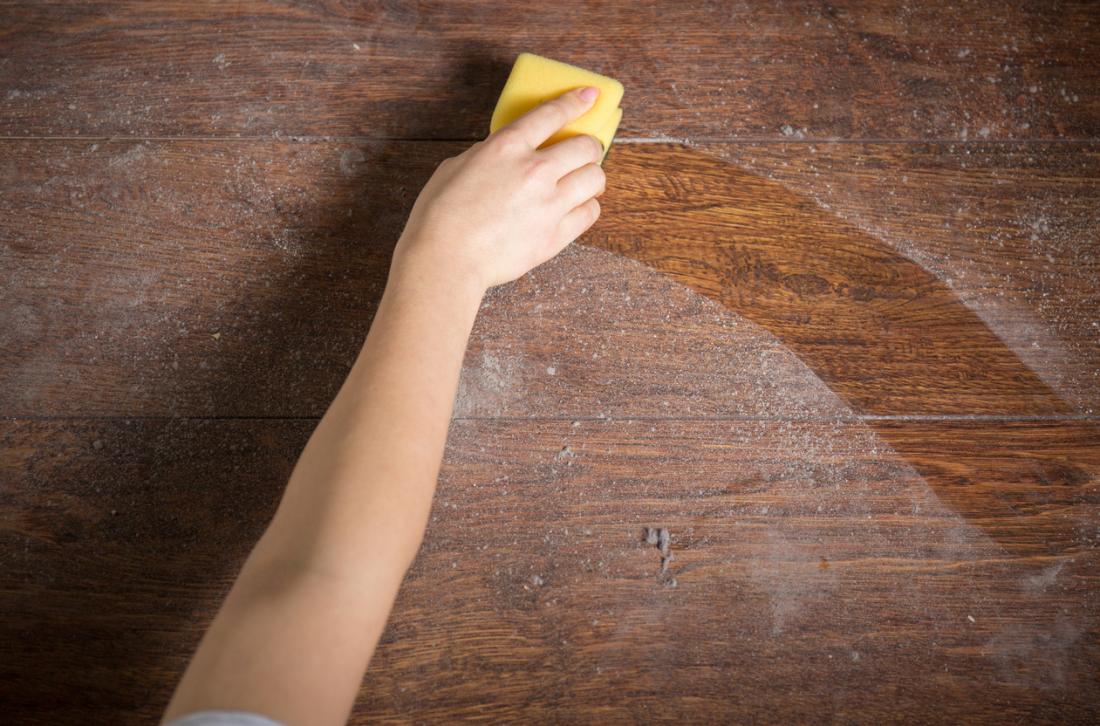
Which surfaces regular cleaning often misses
High surfaces, ventilation grilles, the tops of light fittings, the tops of cupboards, the upper edges of shelving and the space around cables all slip down the list in standard cleaning. None of them needs doing every day, but each should sit in a schedule of its own. Where needed, this work can be booked as deep cleaning or specialised cleaning.
A simple check is to run a finger along the top of a cupboard or the edge of a light fitting. If a layer has built up there, the fault is not in the cleaner’s work but in the fact that these places were never written into the schedule.
Is dry or damp dusting better
A dry cloth often just lifts the dust into the air. A damp microfibre cloth picks the particles up off the surface instead. Electronics and some other surfaces need the opposite, a dry method or a suitable vacuum. Choose the method by the surface and the type of dirt rather than using one technique across the whole office.
The same goes for the order of work. Working from the top down means the dust that falls from higher up is taken off the floor on the last pass. In the other order the floor has to be done twice.
What to put in the office cleaning schedule
A good office cleaning contract lists the surfaces that are cleaned less often as well as the desks and the floors. Not every place has to be in the weekly schedule, but every place has to have a frequency of its own.
Lux Puhastus provides office cleaning for commercial premises in Tallinn, Viimsi, Maardu and the Saue area. Office cleaning starts at 185 euros a month for a hundred square metre office cleaned once a week, and the free site survey also covers the places that are currently left out of the schedule. Ask for a quote.